
Business Plans and the Lean Canvas

A business plan is a written document describing a proposed business, its market, its strategy, and its financial projections. Its format has evolved — the 40-page plan written for a 1980s bank loan officer is rarely appropriate today — but the discipline of writing one remains essential.
Why Write a Plan?

Writing forces confrontation with unanswered questions. How many customers exist? What does it cost to acquire one? What happens in year two after the launch excitement fades? Founders who skip planning often discover these gaps after spending money, not before.
The primary audiences today: the founder (as a working tool), a bank loan officer (still requires the traditional format), and early investors (who want a concise deck, not a 40-page document).
The Traditional Business Plan

Required for most SBA loan applications. Components:
- Executive summary: One-page overview of the business, market, and financial highlights
- Company description: What the business does, its legal structure, and its stage
- Market analysis: Industry size, target customer, and competitive landscape
- Organisational structure: Ownership, key team members, and roles
- Products and services: What is sold, how it is priced, and why customers buy it
- Marketing and sales strategy: How customers will be found and converted
- Financial projections: Projected income statement, cash flow, and balance sheet — typically three to five years
The financial projections are the least reliable and most important part. Banks and investors discount revenue projections heavily — they focus instead on unit economics: does each customer generate more value than it costs to acquire? A plan that cannot answer this question is not fundable.
The Lean Canvas
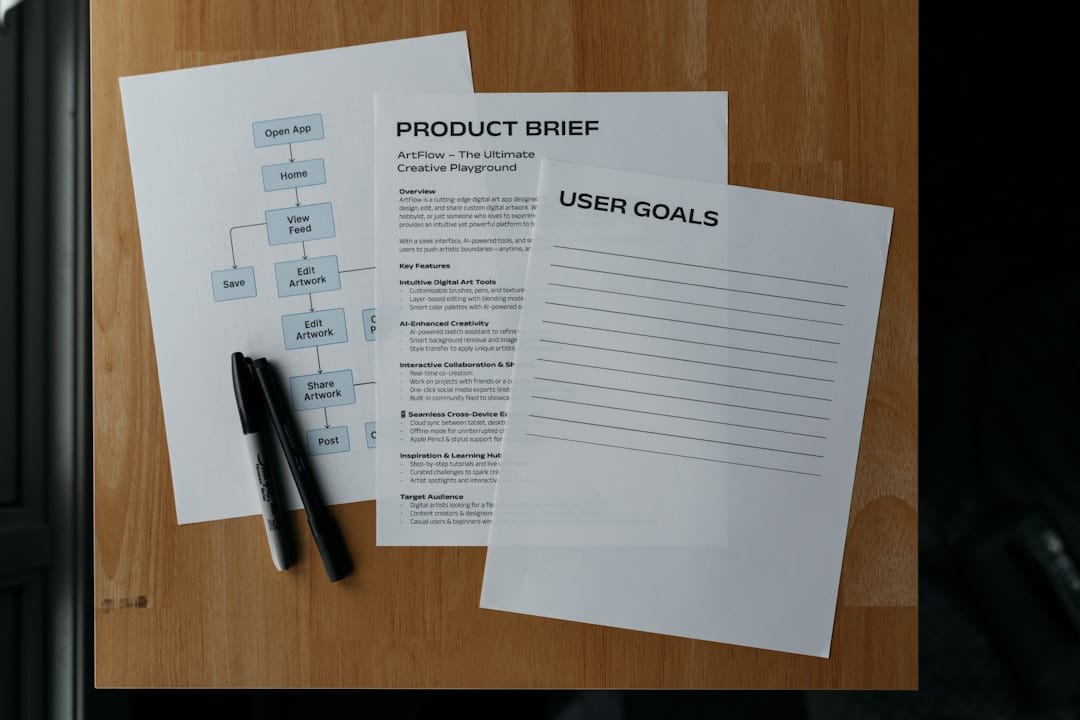
Alex Osterwalder's Business Model Canvas, adapted by Ash Maurya for startups, fits on one page. Nine building blocks:
- Problem: The top 1–3 problems the business solves
- Customer segments: Who experiences those problems
- Unique value proposition: Why this solution, from this business
- Solution: The core features or service delivered
- Channels: How customers are reached
- Revenue streams: How money is made
- Cost structure: The key costs of operating
- Key metrics: The numbers that show whether the model is working
- Unfair advantage: What competitors cannot easily copy
The Lean Canvas is most useful in the earliest stage — before significant capital is committed — as a tool for identifying the riskiest assumption and testing it cheaply. A startup's first goal is not to execute the plan; it is to find out whether the plan is worth executing.
The Unit Economics Test

Both formats benefit from a clear unit economics statement: What does it cost to acquire one customer (CAC)? What does that customer generate over their lifetime (LTV)? Is LTV at least three times CAC? If not, the underlying model is broken regardless of how optimistic the projections look.