
The German Approach
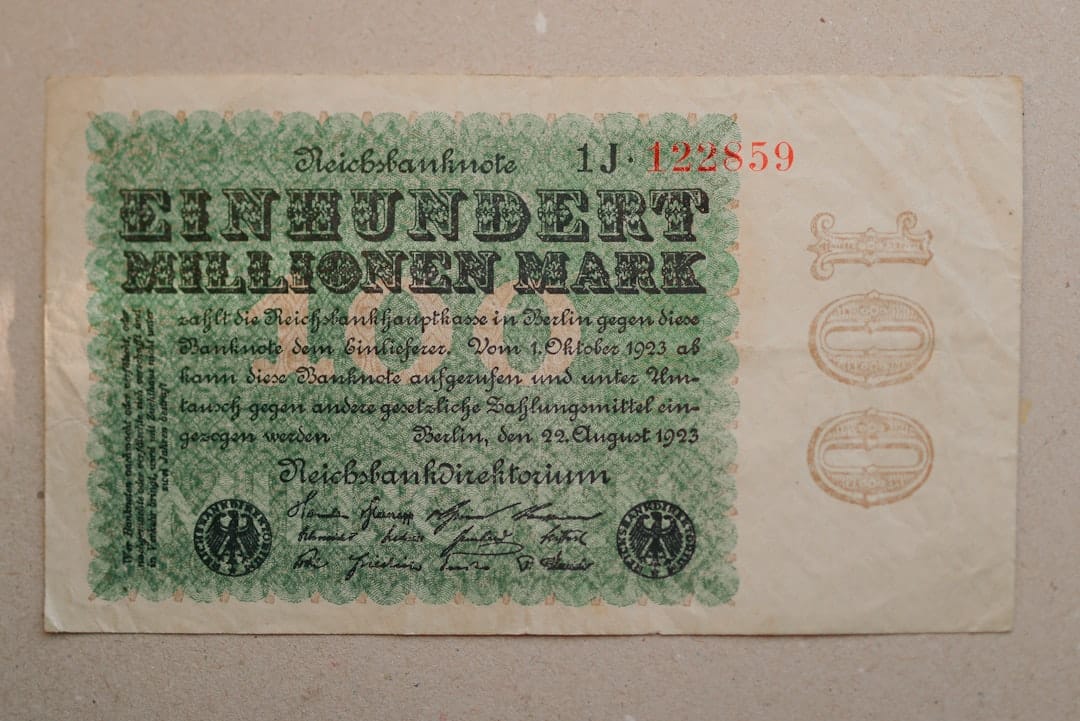
Germany financed its war almost entirely through debt rather than taxation. Finance Minister Helfferich explicitly argued against wartime taxation on the grounds that Germany's enemies would pay the costs through war reparations — a calculation that proved catastrophically wrong. Germany issued nine successive War Loan (Kriegsanleihe) drives, raising approximately 98 billion marks from German savers.
The consequence: Germany accumulated enormous domestic debt, then lost the war and was unable to honour reparations demands. The postwar combination of war debt, reparations pressure, and the economic disruption of defeat created the fiscal conditions that eventually produced the Weimar hyperinflation.